




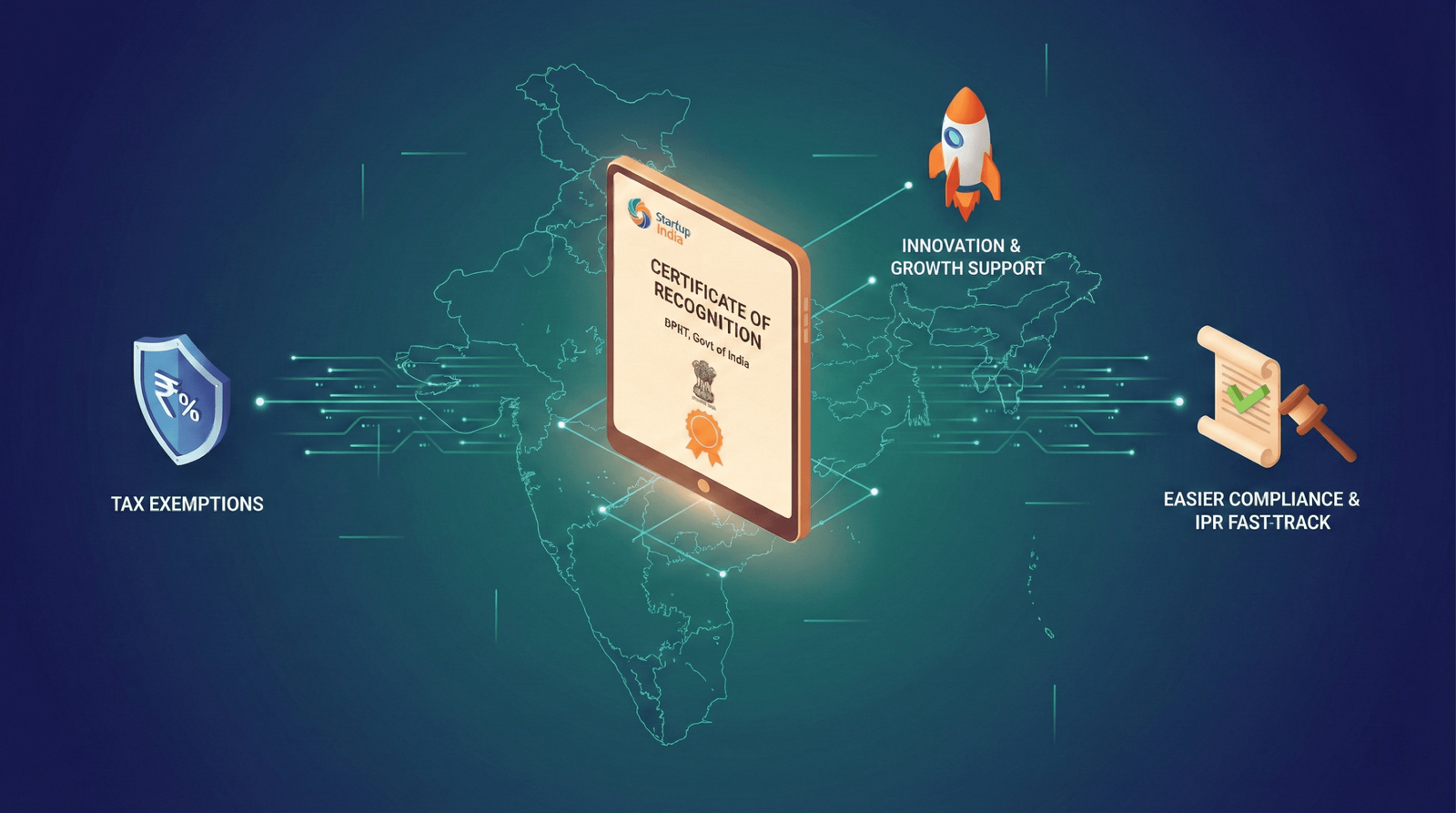
Launched by the Government of India to promote entrepreneurship, the Startup India initiative offers real, practical benefits to eligible businesses — from tax exemptions to easier compliance. Here’s what founders need to know before applying.
Who Is Eligible?
To qualify for Startup India recognition, a business generally needs to meet these criteria:
- Incorporated as a Private Limited Company, LLP, or Registered Partnership Firm
- Less than 10 years old from the date of incorporation
- Annual turnover not exceeding ₹100 crore in any financial year since incorporation
- Working towards innovation, development, or improvement of products, services, or processes — or has a scalable business model with high potential for employment/wealth creation
- Not formed by splitting up or reconstructing an existing business
Key Benefits of Recognition
- Tax Exemption (Section 80-IAC): Eligible startups can claim a 100% tax exemption on profits for 3 consecutive years out of their first 10 years, subject to conditions.
- Angel Tax Exemption: Recognized startups can apply for exemption from tax on investments above fair market value under Section 56(2)(viib), easing early-stage fundraising.
- Self-Certification for Compliance: Startups can self-certify compliance under select labour and environmental laws, reducing the regulatory burden in the early years.
- Easier Winding Up: Startups can be wound up within 90 days under the Insolvency and Bankruptcy Code’s fast-track provisions — far quicker than standard closure timelines.
- Access to Government Tenders: Recognized startups can bid for certain government tenders without the usual prior experience or turnover requirements.
- Intellectual Property Support: Fast-tracked patent applications and rebates on filing fees for patents, trademarks, and designs.
How to Apply
- Incorporate your business as a Private Limited Company, LLP, or Partnership Firm.
- Register on the Startup India portal with your company details and a brief write-up on your innovation/business model.
- Upload supporting documents — incorporation certificate, PAN, and a pitch deck or write-up describing the business.
- Once submitted, the Department for Promotion of Industry and Internal Trade (DPIIT) reviews and grants recognition.
A Few Things to Keep in Mind
- Recognition doesn’t automatically grant the 80-IAC tax exemption — that requires a separate application and approval.
- Documentation quality matters; vague or generic write-ups are a common reason for delays.
- Recognition needs to be renewed/monitored as turnover and age thresholds evolve each year.
Startup India recognition can meaningfully reduce your tax and compliance burden in the crucial early years — but only if the application is filed correctly. Trade N Fill assists startups end-to-end, from incorporation to DPIIT recognition and 80-IAC exemption filing.
